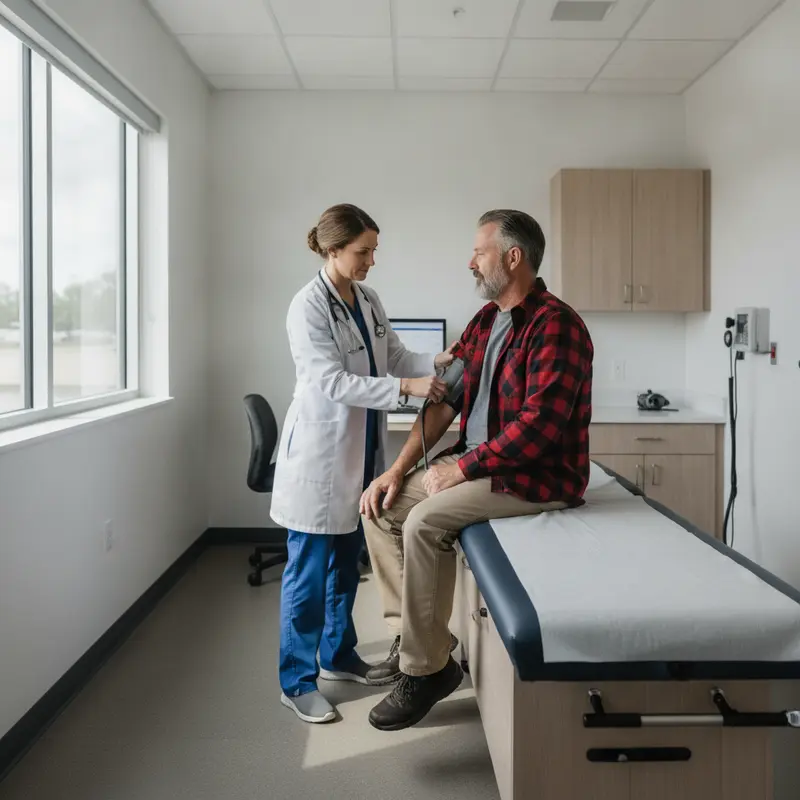
What a DOT Physical Actually Is
A DOT physical is the federally-mandated medical exam that CDL drivers need to hold a commercial driver's license. It is required by the Federal Motor Carrier Safety Administration (FMCSA) and can only be performed by a certified medical examiner listed on the FMCSA National Registry. Passing the exam earns you a Medical Examiner's Certificate - the "medical card" that lets you legally drive commercial.
The purpose is public safety. Trucking, bus driving, and delivery work put drivers in high-stakes situations where a sudden medical event can hurt other people. The DOT physical screens for conditions that could impair driving - uncontrolled high blood pressure, unmanaged diabetes, cardiac history, sleep apnea, vision or hearing problems, medications that affect alertness, and history of certain neurological events.
At FirstCare Urgent Care Center in Oak Lawn, our certified medical examiners perform DOT physical exams for drivers across the I-294 and I-94 trucking corridors every week. We sit between two of the busiest logistics arteries in the Midwest. which means our patient mix includes CDL drivers from the Bedford Park distribution centers, the Burbank truck terminals, and the broader south-suburban logistics network.
Most exams wrap in 20 to 30 minutes when the driver comes prepared. Below is a practical guide for timing your renewal, what to bring, what to expect during the exam, and how to earn the longest medical card available for your situation.
When Timing Matters: Don't Wait Until the Last Week
The standard DOT medical certificate is valid for two years for healthy drivers with no monitored conditions. Drivers with certain conditions - controlled hypertension, sleep apnea on CPAP, diabetes on insulin, or vision correction - typically get a one-year card, sometimes shorter.
When to schedule. Aim to do your renewal exam 30 to 60 days before your current card expires. That gives you buffer if any part of the process gets delayed. for instance, if your blood pressure runs high on exam day and needs a recheck, or if your sleep apnea CPAP compliance report needs to be pulled from your equipment vendor.
Driving with an expired medical card is a serious issue. Federal law requires an active card to hold a CDL. Once it expires, you cannot legally drive commercial - and depending on the state, an expired card can trigger a CDL downgrade with reinstatement costs and paperwork. It is not a "grace period" situation.
Common reasons drivers get delayed. Blood pressure too high on the exam day. Missing prior medical records for a condition being monitored (cardiac clearance letter, diabetes A1C log, CPAP usage data). Vision uncorrected below the DOT standard when glasses or contacts are not brought to the visit.
For drivers coming into Oak Lawn from the surrounding south suburbs, walking in during clinic hours is usually straightforward. Same-day appointments are typical, and Saturday hours accommodate weekend drivers. If you want predictable timing, book online through our Solv Health partner and skip the front-desk wait.
What to Bring: The Checklist That Speeds Things Up
Coming prepared is the single biggest factor in a fast exam. Here is what to have with you for a DOT physical at FirstCare:
Photo ID and your CDL (or learner's permit if you are testing for the first time). Any vision correction you use while driving - glasses or contacts. Hearing aids if you use them.
Your prior DOT card if this is a renewal. If your prior card had a restriction (glasses required, hearing aid required, exempt on diabetes, etc.), we need to see it to document the renewal properly.
A list of all medications you take, with doses. This includes prescription medications, over-the-counter medications you take daily, and supplements. Certain medications - especially opioids, benzodiazepines, and some sleep aids - may require additional documentation from your prescriber to clear you for a card.
Medical records for any monitored condition. Common examples: recent blood pressure readings if you have hypertension, current A1C if you have diabetes, sleep apnea CPAP compliance report (usually 90 days of usage data from your equipment vendor). cardiology clearance letter and recent EKG or stress test if you have cardiac history, seizure clearance from neurology if you have seizure history, or discharge summary and driving clearance for any recent surgery.
Psychiatric medication documentation. If you take medications for depression, anxiety, ADHD, or other psychiatric conditions, bring a letter from your prescribing physician confirming stability and safety to drive commercial. This is one of the most commonly missed documents that delays cards.
The more paperwork you bring, the shorter your recheck timeline. Drivers who come in with everything typically leave the same visit with their Medical Examiner's Certificate signed and filed.
Passing the Exam: What Happens During Your Visit
Your DOT physical at FirstCare follows a standard sequence.
Intake and vitals. Our team takes your height, weight, blood pressure, heart rate, and pulse. Blood pressure is one of the most common failure points, so if you know you tend to be high in medical settings, come in relaxed and hydrated. We will re-check if the first reading is borderline.
Vision and hearing testing. Vision requires 20/40 in each eye and both eyes together, with or without correction. Peripheral vision must meet a minimum standard. Hearing requires the ability to hear a forced whisper at five feet in the better ear.
If you use glasses, contacts, or hearing aids, use them during the test - the card will reflect the correction.
Urinalysis. A simple urine test screens for protein, blood, and sugar. This is not a drug screen - the DOT physical does not include drug testing at FirstCare. Federally-mandated DOT chain-of-custody drug testing must be performed at a certified collection site, which we are not.
Physical exam. Head-to-toe assessment covering heart, lungs, abdomen, extremities, neurological function, and general appearance. Our examiner reviews any monitored conditions with you and asks about symptoms that could affect driving safety.
Medical history review. This is the conversation part. Our examiner asks about cardiac history, seizures, diabetes, sleep apnea symptoms (snoring, daytime drowsiness, morning headaches, witnessed pauses in breathing), current medications, and any recent hospitalizations or surgeries.
Certification decision. Based on the exam and your documentation, our examiner issues a Medical Examiner's Certificate for the appropriate duration - two years for healthy drivers, one year or shorter for drivers with monitored conditions. The card is filed with FMCSA electronically and a copy is given to you.
Common Concerns: BP, Sleep Apnea, Diabetes, Medications
Certain conditions come up over and over at DOT physicals. Here is what they mean for your card.
High blood pressure. The DOT standard is 140/90 or lower. If your reading is 140-159/90-99, you can typically get a one-year card with monitoring. If it is 160-179/100-109, you may get a three-month card while you get treatment started.
If it is 180/110 or higher, you cannot pass until it is brought under control. Bringing recent blood pressure readings from your primary care doctor or pharmacy monitoring helps document that a single high reading is not your baseline.
Sleep apnea. Not a disqualifier. Drivers with treated sleep apnea (usually with CPAP) can hold a DOT card if they can document CPAP compliance. typically 70 percent or more usage of at least four hours per night over 30 days.
Bring your CPAP compliance report from your equipment vendor or online portal.
Diabetes. Type 2 diabetes on oral medications is straightforward - bring your recent A1C. Insulin-treated diabetes requires additional documentation and a longer path, but drivers with well-controlled insulin-treated diabetes can qualify for DOT cards under current rules. Bring a letter from your prescribing physician.
Cardiac history. Prior heart attack, stent placement, or bypass surgery requires cardiology clearance and typically a recent stress test or EKG. Bring the letter from your cardiologist confirming you are safe to drive commercial.
Medications. Most maintenance medications are fine. Opioids and benzodiazepines require prescriber documentation to clear you. Some medications (particularly Schedule II opioids and certain psychiatric medications) may disqualify you regardless.
For anything you are uncertain about, call ahead at (708) 265-2702. Our team will tell you what documentation you need before you come in, saving you a return trip.
Frequently Asked Questions
Do I need to fast for a DOT exam?
No fasting required for a DOT physical. We do include a urinalysis which does not need fasting. Come in normally hydrated - showing up dehydrated can affect blood pressure readings and urine concentration.
What if my blood pressure is high on the exam day?
We re-check after a rest. If the first reading is borderline, we take a second and sometimes a third reading later in the visit. If it is still elevated, our examiner discusses next steps - shorter card with medication follow-up, or bringing home BP monitoring records to document that your baseline is different. Coming in relaxed and well-hydrated helps.
Can I get my medical card the same day?
Yes, in most cases. When all documentation is in order and no red flags come up during the exam, you receive your Medical Examiner's Certificate at the end of the visit. If a condition requires additional documentation - CPAP compliance, cardiology clearance, medication paperwork - we tell you what to bring and how quickly you can return.
Do you accept walk-ins for DOT physicals?
Yes. Walk in during clinic hours - no appointment required. If you want predictable timing, reserve a same-day spot online through our Solv Health partner. Most DOT exams are completed in 20 to 30 minutes when the driver comes prepared with photo ID, current medications, prior card, and relevant medical records.
Do you perform DOT drug screens?
No. FirstCare does not perform DOT-regulated chain-of-custody drug screens or breath alcohol testing. Federally-mandated DOT drug testing must be performed at a DOT-certified collection site. The DOT physical exam - the FMCSA medical certification portion - is what we perform. Employers requiring both should schedule the drug screen at a separate certified facility.